
Have queries?for Appointment: +91 9051148463 / 7439437809
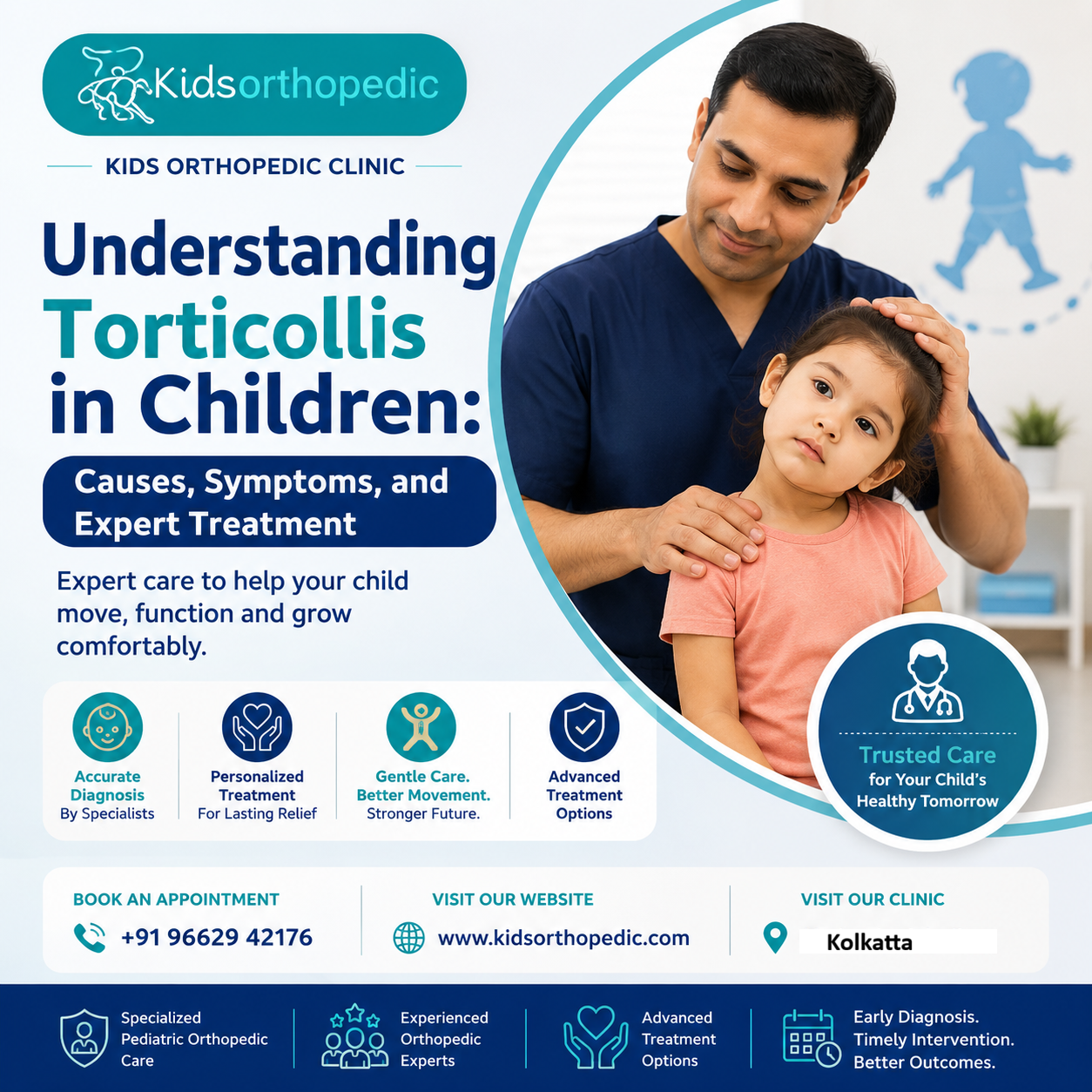
Understanding Torticollis in Children: Causes, Symptoms, and Expert Treatment
Welcoming a newborn into the world is an incredibly joyous occasion for any family. However, the early months of infancy can also bring unexpected health concerns that cause parents immense anxiety. One such condition that often alarms parents but is highly treatable is Torticollis in children, commonly referred to as “wry neck.” If you have noticed that your baby’s head consistently tilts to one side while their chin points in the opposite direction, they may be experiencing this pediatric orthopedic condition.
Fortunately, with early detection and the guidance of specialized pediatric orthopedic experts, Torticollis can be successfully managed and corrected. Drawing on the clinical expertise of Dr. Soumya Paik at the Kids Orthopedic Clinic in Kolkata, this article explores the causes, signs, and comprehensive treatment options for Torticollis in children.
What is Torticollis?
Torticollis is a musculoskeletal condition characterized by an abnormal, asymmetrical head or neck position. The term literally translates from Latin as “twisted neck.” In infants, it is most commonly caused by an issue with the sternocleidomastoid (SCM) muscle—a large, rope-like muscle that runs down both sides of the neck from the back of the ears to the collarbone. When one side of this muscle becomes shortened, tight, or scarred, it pulls the child’s head to that side, making it difficult and sometimes painful for them to turn their neck freely.
Causes and Early Detection
As explained by Dr. Soumya Paik in a recent educational video, congenital muscular torticollis often originates during childbirth. The condition can occur due to birth trauma, an awkward position in the womb, or an injury to the neck muscles during a difficult delivery. The trauma can cause a small amount of bleeding or swelling in the SCM muscle, which eventually heals with scar tissue, causing the muscle to tighten and shorten.
Interestingly, parents and pediatricians might not notice the condition immediately after birth. According to Dr. Paik, the stiffness and tilt often become far more apparent around 5 to 6 months of age. As the baby begins to develop more head control and attempts to look around their environment, parents typically notice that the child struggles to turn their neck in one specific direction, preferring to keep their head tilted to a single side.
Treatment Options: From Therapy to Surgery
The most critical factor in treating Torticollis in children is early intervention. Because children are constantly growing, addressing the muscle tightness early yields the best results and prevents secondary complications, such as facial asymmetry or flat head syndrome (positional plagiocephaly).
1. Physiotherapy and Exercises: For the vast majority of infants diagnosed early, conservative treatment is highly effective. Dr. Paik notes that initial treatment almost always involves specialized physiotherapy. Parents are taught specific, gentle stretching exercises to elongate the tightened sternocleidomastoid muscle. With consistent physical therapy and repositioning techniques at home, many children fully recover their range of motion without any need for invasive procedures.
2. Surgical Intervention: However, conservative methods do not work for every child, especially if the condition is diagnosed late or the muscle scarring is severe. If the problem persists despite prolonged physiotherapy, surgical intervention becomes necessary. In his clinical practice, Dr. Paik shared the success story of a 4-year-old child whose persistent Torticollis was significantly corrected through a planned surgical procedure. By meticulously releasing the tight muscle, the child regained proper neck alignment and mobility. As echoed in patient testimonials from the Kids Orthopedic Clinic, such as the successful operation on a young boy named Sauradeep Sarkar for Wry Neck, expertly executed surgery provides a permanent and aesthetically pleasing resolution to the deformity.
The Importance of Expert Pediatric Care
Children are not simply small adults. Their growing skeletal and muscular systems respond differently to injuries and treatments. Therefore, conditions like Torticollis require the nuanced skill of a dedicated pediatric orthopedic surgeon.
At the Kids Orthopedic Clinic in Newtown, Kolkata, Dr. Soumya Paik brings over a decade of specialized experience to the table. Holding an MBBS, MS in Orthopedics, and international fellowships from prestigious institutions in Mumbai and Singapore, Dr. Paik emphasizes a holistic and individualized approach. The clinic integrates diagnosis, therapy, and advanced surgical care under one roof, ensuring that young patients receive a seamless continuum of care.
Watch Our Video : https://youtube.com/shorts/0A-cKkCNCfk
Conclusion
Discovering that your baby has Torticollis can be distressing, but it is important to remember that it is a highly treatable condition. Whether the path to recovery involves dedicated stretching exercises or a minor corrective surgery, the prognosis is overwhelmingly positive. If you suspect your child is suffering from Torticollis or any other musculoskeletal issue, seeking a prompt evaluation from a trusted pediatric orthopedic specialist like Dr. Soumya Paik is the best step you can take toward ensuring their healthy, active future.