
Have queries?for Appointment: +91 9051148463 / 7439437809
Growing Rod Alternative in Osteogenesis Imperfecta: Modern Surgical Options for Children
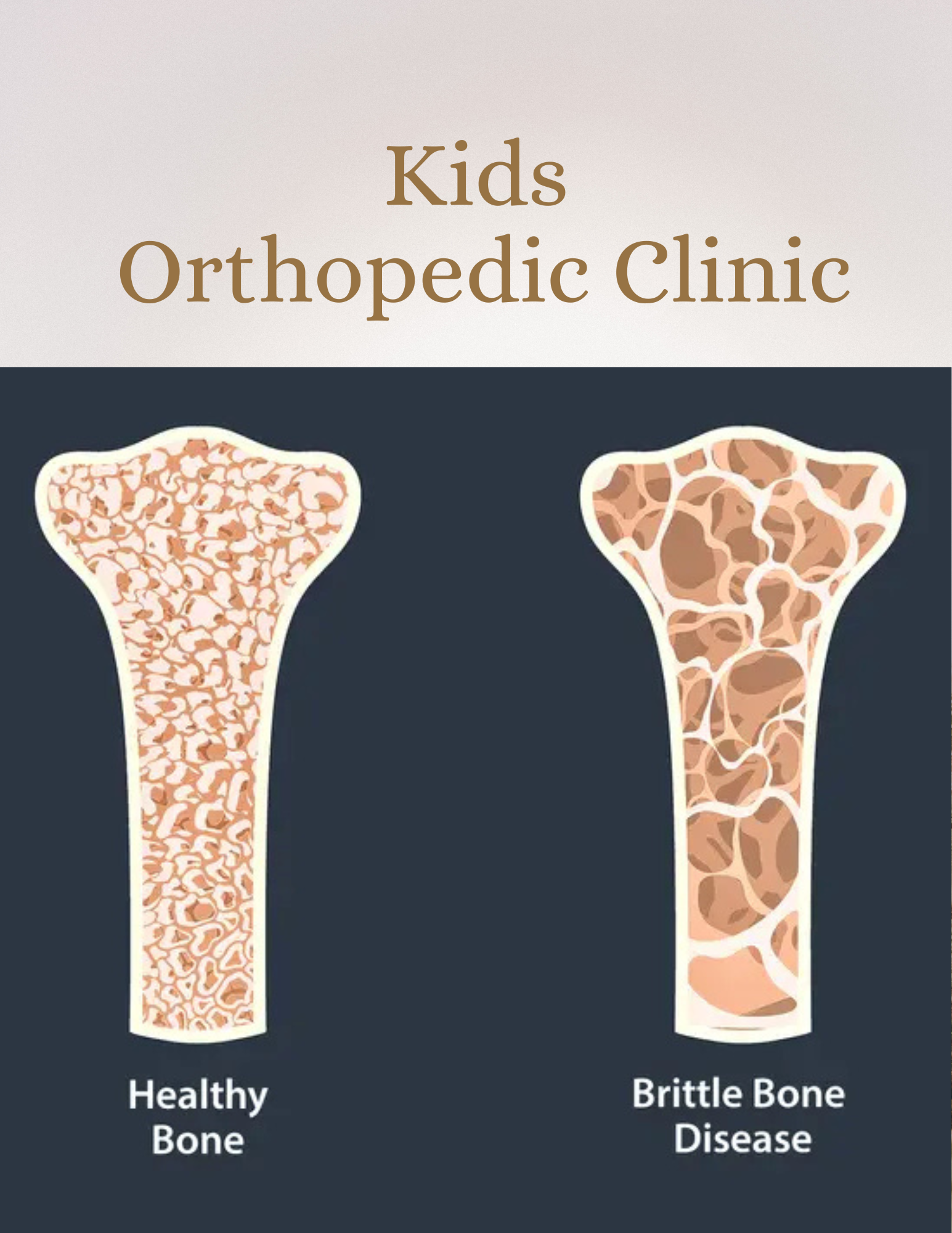
Osteogenesis Imperfecta (OI), commonly known as brittle bone disease, is a genetic condition where bones are fragile and prone to frequent fractures. Children with OI often develop bone deformities, bowing of the limbs, and repeated fractures, which can affect their mobility and quality of life.
Orthopedic treatment for OI frequently involves the use of growing rods (telescopic rods) to stabilize long bones and allow them to grow with the child. However, in certain cases, surgeons may need to consider a growing rod alternative in osteogenesis imperfecta, especially when the child is very young, the bone canal is narrow, or complications occur.
At https://kidsorthopedic.com/, pediatric orthopedic specialists focus on advanced surgical techniques that help stabilize fragile bones while allowing children to grow and develop better mobility.
Understanding Osteogenesis Imperfecta
Osteogenesis imperfecta is a genetic disorder affecting collagen production, which leads to weak and brittle bones. Children with OI often experience:
-
Frequent fractures
-
Bowed or curved bones
-
Short stature
-
Joint laxity
-
Muscle weakness
The condition varies in severity depending on the type of OI. Some children may have only occasional fractures, while others may experience multiple fractures throughout childhood.
Because of the fragility of bones, orthopedic surgical stabilization is often necessary to prevent deformity and improve mobility.
What Are Growing Rods (Telescopic Rods)?
Growing rods, also known as telescopic intramedullary rods, are commonly used in children with OI to support long bones such as the femur (thigh bone) and tibia (shin bone).
These rods are inserted inside the bone and have the ability to extend as the child grows, reducing the need for repeated surgeries.
The goals of growing rod surgery include:
-
Stabilizing fragile bones
-
Preventing repeated fractures
-
Correcting bone deformities
-
Improving walking ability
One well-known system is the Fassier-Duval telescopic rod, which attaches to the growth plates and lengthens as the bone grows.
Although telescopic rods are highly effective, they may not be suitable for every patient.
Why Alternatives to Growing Rods May Be Needed
In some children with osteogenesis imperfecta, surgeons may look for alternatives to traditional growing rods.
Common reasons include:
-
Very narrow bone canals in young children
-
Severe bone deformity
-
Previous rod failure or bending
-
Infection or complications from earlier surgery
-
Technical limitations of telescopic systems
Because each child’s bones are different, orthopedic surgeons often customize treatment to achieve the best outcomes.
Growing Rod Alternatives in Osteogenesis Imperfecta
Several surgical options can serve as alternatives or modifications to growing rod systems.
1. Sliding Elastic Nail Technique
One innovative alternative is the sliding elastic nail technique, which mimics the function of telescopic rods.
In this method:
-
Two flexible nails are inserted into the bone from opposite ends.
-
As the child grows, the nails slide within the bone, allowing length adjustment.
This technique can be useful in young children who are not eligible for telescopic rods because of narrow bone canals.
Benefits include:
-
Minimally invasive procedure
-
Lower surgical complexity
-
Reduced cost compared to telescopic rods
2. Titanium Elastic Intramedullary Nails
Titanium elastic nails are sometimes used as a temporary stabilization method.
These flexible nails help:
-
Support weak bones
-
Reduce fracture risk
-
Improve alignment
Although they do not lengthen like telescopic rods, they may be used in younger patients or smaller bones where telescopic systems cannot be inserted.
3. Static Intramedullary Rods
Before telescopic rods were developed, surgeons used static rods such as:
-
Rush rods
-
Kirschner wires (K-wires)
-
Williams rods
These rods are fixed in length and may require replacement as the child grows.
Despite the need for future surgeries, static rods may still be useful when telescopic rods are not feasible.
4. Combined Rod and External Fixation Technique
Another advanced approach involves combining intramedullary rods with external fixation systems.
In this technique:
-
Bone deformities are corrected surgically.
-
A rod stabilizes the bone internally.
-
A temporary external frame provides additional stability.
Studies show that combining telescopic rods with external fixation can improve stability and allow earlier rehabilitation.
This approach is often used in severe deformities or complex cases of OI.
Benefits of Alternative Techniques
Growing rod alternatives can provide several advantages depending on the child’s condition.
1. Better Suitability for Small Bones
Young children with narrow bones may not accommodate telescopic rods, making alternative techniques more practical.
2. Reduced Surgical Complexity
Some alternatives are technically simpler and require less invasive procedures.
3. Improved Bone Stability
Certain techniques allow surgeons to correct deformities and stabilize fragile bones effectively.
4. Flexibility in Treatment Planning
Orthopedic surgeons can choose the most appropriate method based on:
-
Age of the child
-
Bone size and structure
-
Severity of deformity
-
Previous surgeries
Role of Pediatric Orthopedic Specialists
Treating osteogenesis imperfecta requires specialized pediatric orthopedic expertise.
Doctors evaluate several factors before recommending surgery, including:
-
Frequency of fractures
-
Bone deformity severity
-
Walking ability
-
Growth potential
Modern orthopedic care often combines:
-
Surgical stabilization
-
Physiotherapy
-
Medication such as bisphosphonates
-
Mobility training
The goal is to improve bone strength, prevent fractures, and enhance mobility.
Importance of Early Surgical Intervention
Early orthopedic management can significantly improve outcomes for children with osteogenesis imperfecta.
Surgical stabilization helps:
-
Prevent progressive bone deformity
-
Improve walking and standing ability
-
Reduce fracture frequency
-
Enhance overall quality of life
Timely treatment also allows children to participate more actively in daily activities and physical therapy programs.
Advanced Pediatric Orthopedic Care
At Kids Orthopedic Clinic, pediatric orthopedic specialists focus on advanced treatment options for complex bone conditions, including osteogenesis imperfecta.
Treatment plans are customized based on each child’s condition and may include:
-
Intramedullary rodding procedures
-
Deformity correction surgery
-
Alternative rod techniques
-
Rehabilitation and physiotherapy
Through early diagnosis and expert care, many children with OI can achieve improved mobility and independence.
Conclusion
Osteogenesis imperfecta presents significant orthopedic challenges due to fragile bones and repeated fractures. While growing rods (telescopic rods) remain the standard surgical treatment, some children require alternative techniques when telescopic rods are not suitable.
Options such as sliding elastic nails, titanium elastic rods, static intramedullary rods, and combined fixation techniques provide effective alternatives for stabilizing bones and correcting deformities.
With advances in pediatric orthopedic surgery, these techniques allow doctors to tailor treatment to each child’s needs and support healthier growth and mobility.
For specialized pediatric orthopedic care and advanced treatment options for osteogenesis imperfecta, visit https://kidsorthopedic.com/ to learn more about expert services for children’s bone conditions.